

Fellowships
Obstetrics & Gynecology
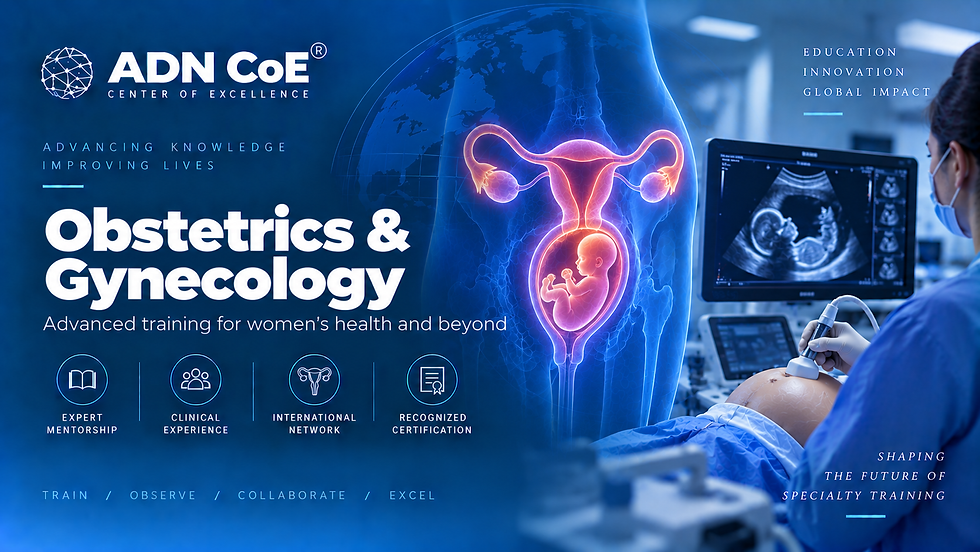
Specialty Overview
Obstetrics & Gynecology encompasses the comprehensive care of women across reproductive, obstetric and gynecologic health, from preventive medicine and pregnancy management to complex surgical and multidisciplinary care.
ADN CoE programmes are designed for physicians seeking structured exposure to contemporary obstetric and gynecologic practice. Depending on the selected pathway, participants may observe specialist clinics, labour and delivery units and operating-room workflows, engage in structured case-based learning or undertake a longer-term fellowship focused on longitudinal clinical, surgical and academic development.
Programmes may include exposure to antenatal care, high-risk pregnancy, labour and delivery, maternal–fetal medicine, benign gynecology, minimally invasive gynecologic surgery, reproductive health, gynecologic oncology pathways and multidisciplinary women’s health care.
Clinical Observership
Observe Contemporary Obstetric & Gynecologic Practice
The Obstetrics & Gynecology Clinical Observership is designed for physicians who wish to observe how specialists assess, investigate and manage patients across a broad spectrum of obstetric and gynecologic conditions.
The programme is primarily observation-based and focuses on understanding clinical workflows, diagnostic pathways, perioperative planning, labour management and multidisciplinary decision-making.
Clinical Exposure May Include
Gynecologic history taking and examination
Antenatal assessment
Routine pregnancy follow-up
High-risk pregnancy pathways
Maternal–fetal medicine exposure
Labour and delivery workflows
Caesarean section observation
Postpartum care
Abnormal uterine bleeding
Fibroids and adenomyosis
Endometriosis
Ovarian cysts and adnexal masses
Menopause and hormonal health
Reproductive health
Infertility pathways where available
Colposcopy and cervical pathology workflows
Laparoscopic gynecologic surgery
Hysteroscopic procedures
Gynecologic oncology pathways
Multidisciplinary case discussions
Educational Format
Participants observe obstetric and gynecologic practice under the supervision of experienced faculty and may attend appropriate outpatient clinics, labour and delivery units, operating-room sessions, case discussions and multidisciplinary meetings.
The observership does not provide independent patient-care or procedural authority and does not replace local licensing, institutional credentialing or recognised specialist training requirements.
Best Suited For
Physicians seeking:
Short-term exposure to contemporary obstetrics and gynecology
Familiarity with women’s health clinical workflows
Observation of obstetric and gynecologic procedures
Greater understanding of perioperative and perinatal decision-making
International professional development without undertaking a long-term programme
Clinical Immersion
Move Beyond Observation into Structured Women’s Health Learning
The Obstetrics & Gynecology Clinical Immersion Programme provides a more intensive educational experience than a standard observership.
Participants receive structured faculty interaction, guided case review and focused clinical and surgical learning while remaining within the boundaries of local institutional, professional and licensing requirements.
The programme is designed to help participants understand not only what obstetricians and gynecologists do, but also how clinical findings, imaging, pregnancy risk, reproductive goals and surgical factors influence management decisions.
The Programme May Include
Structured review of obstetric cases
Faculty-guided antenatal risk assessment
High-risk pregnancy case discussions
Labour-management decision-making
Fetal surveillance review
Postpartum complication discussions
Gynecologic diagnostic reasoning
Pelvic ultrasound review
Abnormal bleeding work-up
Fibroid and endometriosis case planning
Adnexal mass evaluation
Laparoscopic surgery case review
Hysteroscopy planning
Cervical pathology discussions
Reproductive health case review
Gynecologic oncology pathways
Perioperative risk and recovery planning
Multidisciplinary women’s health conferences
Educational Emphasis
Clinical immersion focuses on:
Observe → Assess → Interpret → Analyse → Discuss → Apply
Participants are encouraged to analyse obstetric and gynecologic cases, review relevant imaging and investigations and discuss management strategies directly with faculty rather than functioning solely as passive observers.
Best Suited For
Physicians who want:
More intensive exposure than an observership
Structured interaction with obstetric and gynecologic faculty
Case-based clinical reasoning
Greater understanding of pregnancy and surgical risk assessment
Exposure to contemporary gynecologic procedural decision-making
Focused professional development without committing to a long-term fellowship
Clinical Fellowship
Longitudinal Training in Obstetrics & Gynecology
The Obstetrics & Gynecology Clinical Fellowship is the most comprehensive educational pathway within the specialty.
It is designed for physicians seeking sustained exposure to women’s health practice and progressive development in obstetric assessment, gynecologic diagnosis, surgical planning, perioperative care and longitudinal patient management.
Unlike a short observership or clinical immersion programme, the fellowship follows a longitudinal educational model, allowing participants to encounter a broader spectrum of obstetric and gynecologic cases and understand how management evolves from initial assessment through intervention, delivery, surgery and follow-up.
Fellowship Focus Areas May Include
Routine antenatal care
High-risk pregnancy
Maternal–fetal medicine
Hypertensive disorders of pregnancy
Gestational diabetes
Preterm birth
Fetal growth disorders
Labour and delivery
Caesarean section pathways
Postpartum care
Obstetric emergencies
Abnormal uterine bleeding
Uterine fibroids
Adenomyosis
Endometriosis
Benign ovarian disease
Adnexal masses
Menopause
Reproductive endocrinology exposure
Infertility pathways where available
Colposcopy and cervical dysplasia
Laparoscopic gynecologic surgery
Hysteroscopy
Pelvic floor disorders where available
Gynecologic oncology exposure
Long-term women’s health follow-up
Fellowship Learning Model
The fellowship may combine:
Longitudinal outpatient and inpatient case exposure
Antenatal clinic exposure
Labour and delivery observation
Operating-room observation
Faculty-guided case discussions
Obstetric imaging review
Gynecologic ultrasound review
Surgical planning meetings
Multidisciplinary women’s health conferences
Academic reading
Evidence-based guideline review
Clinical reasoning exercises
Case presentations
Morbidity and complication discussions
Reflective learning
Structured faculty feedback
Where permitted by the host institution and applicable regulations, additional supervised educational activities may be incorporated. The precise scope of participation is determined by the host centre, participant background and local professional requirements.
Learning Objectives
By the end of the fellowship, participants should have developed a stronger ability to:
Approach obstetric and gynecologic presentations systematically
Assess maternal and fetal risk
Interpret relevant obstetric and gynecologic imaging
Recognise common and high-risk pregnancy conditions
Understand labour and delivery management principles
Evaluate common benign gynecologic disorders
Understand indications for hysteroscopic and laparoscopic procedures
Recognise gynecologic red flags requiring further evaluation
Integrate clinical, imaging and laboratory findings into management decisions
Understand perioperative and postpartum complication management
Participate effectively in multidisciplinary women’s health care
Develop structured long-term follow-up plans
Apply contemporary evidence and guideline recommendations to obstetric and gynecologic practice
Best Suited For
The fellowship is intended for physicians seeking:
Long-term structured development in obstetrics and gynecology
Broader exposure to obstetric and gynecologic case management
Regular faculty interaction
Progressive clinical and surgical learning over time
Deeper understanding of maternal, fetal and gynecologic decision-making
Greater exposure to minimally invasive gynecologic surgery and multidisciplinary care
International professional and academic development

Durations
Available Institutions
